A calm, guided rhythm for your homeschool week.
![[background image] image of cozy reading nook (for an author & writer)](https://cdn.prod.website-files.com/69dbe348d0a29252603f7d2c/6a2b437cb7c59ea66369dca0_june%2015%202026%20plan%20image.png)
A Gentle Week, Made Simple
A calm rhythm designed to bring beauty, wonder, and meaningful work into your homeschool day.
This weekly rhythm is meant to give your family a calm shape to the week without adding more to your plate.
There is no need to complete everything. Choose what fits. A few simple, intentional experiences are enough.
This week includes three guided days. Each day offers a morning gathering, one hands-on experience, one small act of meaningful work, time outside, quiet work, and a simple reflection.
Follow the rhythm, not the clock.
Early Summer Weekly Rhythm
Day One
Today we slow down and notice movement.
Morning Gathering
Let this gently open the day.
Begin near a window, nature table, or quiet outdoor spot.
Place one small seasonal object in the center: a feather, leaf, flower, stone, ribbon, or small bowl of water.
Speak together:
Summer wind is passing by,
Moving leaves and clouds up high.
Round and round and back again,
Over grass and through the lane.
We will watch and we will see,
How the world can move with ease.
Pause for a moment.
Then ask:
What did you notice moving today?
A curtain. A leaf. A cloud. A bird. Your child’s own hands.
Anything is enough.
Core Experience
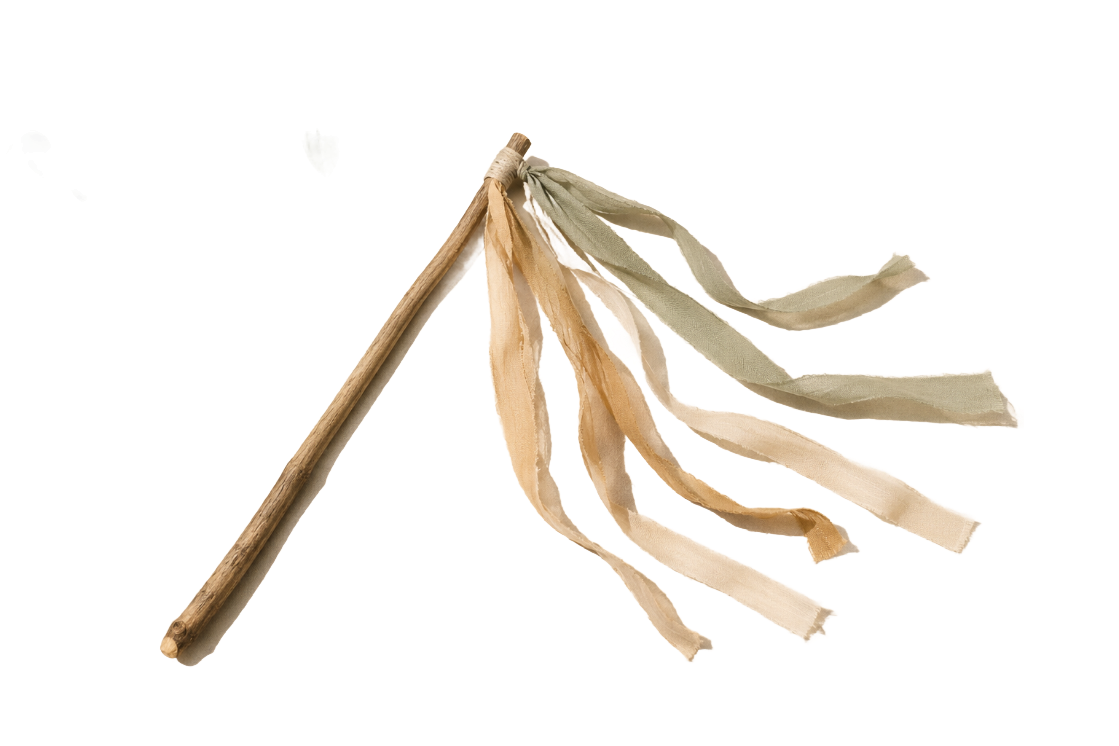
Make a Simple Wind Streamer
A simple exploration of air, movement, and attention.
You’ll need:
- A stick, twig, wooden spoon, or paper towel tube
- Ribbon, fabric strips, yarn, crepe paper, or strips of paper
- Tape or string
Tie or tape the ribbons or strips to the stick.
Hold the streamer still.
Then move it slowly.
Then move it quickly.
Watch what changes.
You might wonder aloud:
What happens when we move it slowly?
What happens when the wind moves it?
Can you make it go high, low, around, or side to side?
There is no need to teach the science.
Allow your child to notice.
When interest fades, the experience is complete.
Meaningful Work
Move with Purpose
Invite your child into one small act of real work that includes carrying, moving, sorting, or putting things in place.
Choose one:
- Carry napkins to the table
- Move laundry from one basket to another
- Bring towlels outside or inside
- Carry a small watering can
- Sweep leaves or crumbs
- Put shoes in a basket
- Move a book back to a shelf
Move slowly.
Let your child participate fully.
These simple acts help children experience themselves as capable contributors within the home.
Outdoor Invitation
Look for Movement
Step outside together and look for things that move.
You might notice:
- Leaves moving in the wind
- Shadows changing
- Birds flying
- Ants walking
- Water dripping or flowing
- Grass bending
- Clouds moving
Walk slowly.
Invite your child to choose one kind of movement to copy with their body.
A leaf floating.
A bird flying.
A stream flowing.
A bug crawling.
Follow their interest.
Quiet Work
Movement Lines
Simple drawing, quiet attention, and gentle creativity.
You’ll need:
- Paper
- Crayons, colored pencils, or a pencil
They might make:
- Wavy lines
- Loops
- Zigzags
- Circles
- Long paths
- Short marks
- Fast lines
- Slow lines
Invite your child to draw lines that show movement.
You can say:
Can your hand show how the ribbon moved?
Sit nearby without directing the outcome.
When the page feels complete, set it aside.
The work is finished.
Small Reflection
Simple questions help children revisit and deepen their discoveries.
Later in the day, perhaps at lunch or bedtime, ask:
What did you notice moving today?
Or:
How did your streamer move?
For older children:
What changed when you moved it faster or slower?
No formal answer is needed.
The question is enough.
Day Two
Today we build, test, and adjust.
Morning Gathering
Begin near a window, nature table, or quiet outdoor spot.
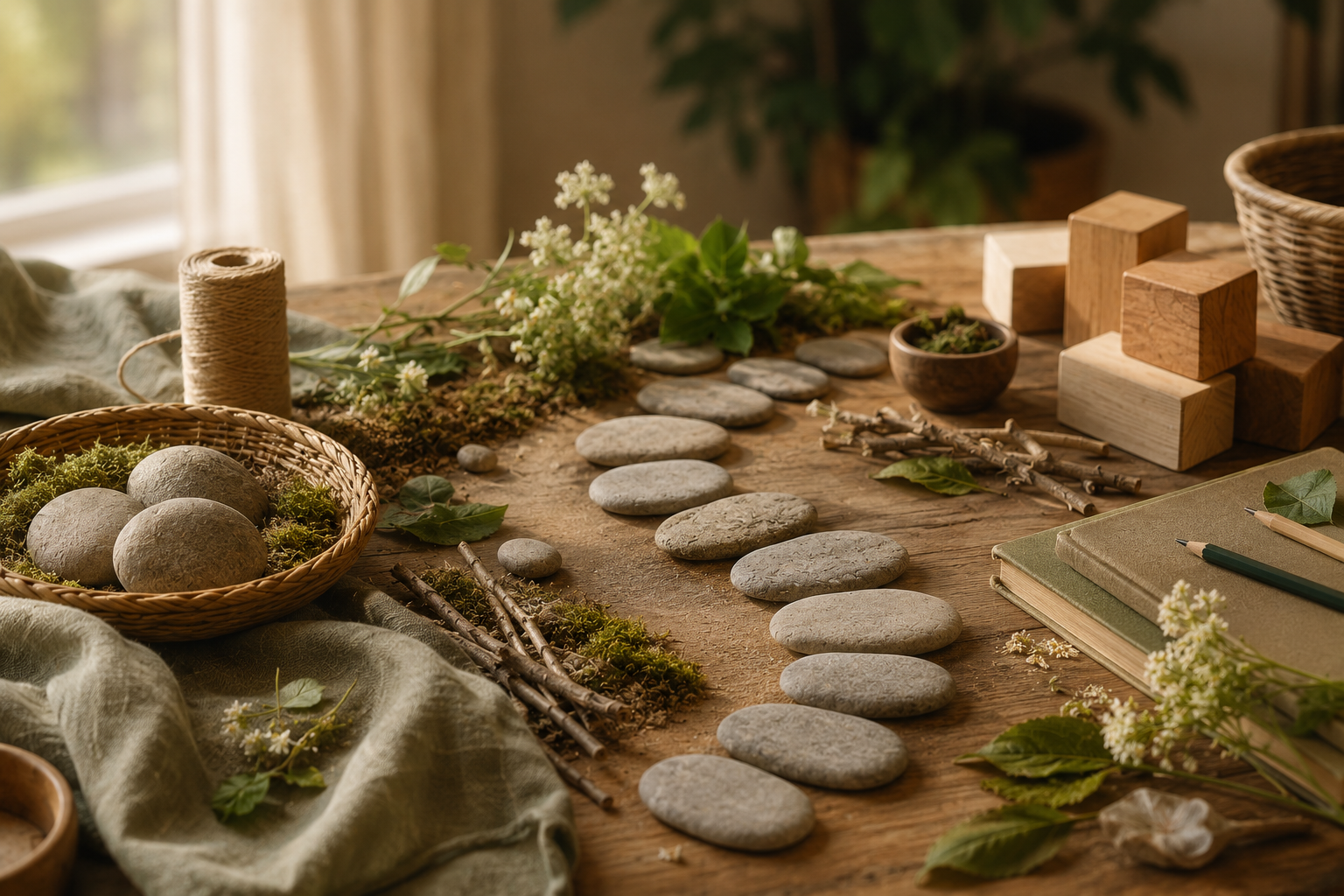
Place one small object in the center: a stone, block, stick, shell, pinecone, or toy animal.
Speak together:
Stone by stone and stick by stick,
Build it slow and build it thick.
Over, under, through, around,
Paths are waiting to be found.
Try again and we will see,
What this little path can be.
Pause for a moment.
Then ask:
What could we build today?
A road. A bridge. A tunnel. A path. A little place for animals. A way for water, cars, or stones to travel.
Anything is enough.
Core Experience
Build or Arrange a Little Path
A hands-on project for building, testing, and trying again.
You can work with any of the following:
- Sticks
- Stones
- Blocks
- Books
- Cardboard
- Small boards
- Couch cushions
- Toy cars
- Animal figures
- Shells or pinecones
- A ball or small object that can roll
Invite your child to build or arrange one simple path.
It might be:
- A path for animals
- A bridge for a toy
- A ramp for a ball
- A road for cars
- A stepping path with stones or paper
- A tiny obstacle course
Let the first version be simple.
Then test it.
You might wonder aloud:
What happens when we make it higher?
What happens when we make it longer?
What rolls? What slides? What stays still?
What could we change?
There is no need for the path to be perfect or permanent.
The building, testing, and changing are the work.
Meaningful Work
Gathering and Sorting
Invite your child into one small act of real work connected to the project.
Choose one:
- Gather sticks into a basket
- Sort blocks by size
- Put stones in a bowl
- Carry cardboard pieces to the table
- Return materials to a shelf
- Fold a blanket used for the path
- Sweep or tidy the building area
Let your child help with the beginning and the ending.
This helps children understand that projects have a rhythm: gather, build, use, care for, and return.
Outdoor Invitation
Find Natural Paths
Step outside and look for paths already in the world.
You might notice:
- A line of ants
- A trail through grass
- A sidewalk
- A driveway
- A stream bed
- A row of stepping stones
- A path made by shadows
- A place where water might travel after rain
Walk slowly.
Invite your child to make one small outdoor path with sticks, stones, leaves, or pinecones.
It can be tiny.
It can be messy.
It can disappear when you leave.
That is enough.
Quiet Work
Draw a Map
Simple drawing, memory, and early spatial thinking.
You’ll need:
- Paper
- Pencill, crayon, or marker
Invite your child to draw the path, ramp, bridge, or course they made.
It does not need to look accurate.
They might draw:
- A line
- A circle
- A road
- Blocks
- A bridge
- A toy
- Themselves moving through it
You can say:
Can you show where it started?
Can you show where it ended?
For younger children, you can draw a simple line and let them add marks.
When the page feels complete, set it aside.
Small Reflection
Simple questions help children revisit and deepen their discoveries.
Later in the day, ask:
What did you build today?
Or:
What happened when you tested it?
For older children:
What would you change if you built it again?
No formal answer is needed.
The question is enough.
Day Three
Today we notice the rhythm of the day.
Morning Gathering
Begin near a window, nature table, or quiet outdoor spot.
Place one small object in the center: a flower, stone, shell, spoon, cup, or folded napkin.
Speak together:
Morning comes and we begin,
Light outside and light within.
Midday brings our work and play,
Afternoon will close the day.
Step by step and one by one,
We find our rhythm in the sun.
Pause for a moment.
Then ask:
What usually happens first in our day?
Breakfast. Getting dressed. Feeding the pet. Going outside. Reading a story. Tidying up.
Anything is enough.
Core Experience
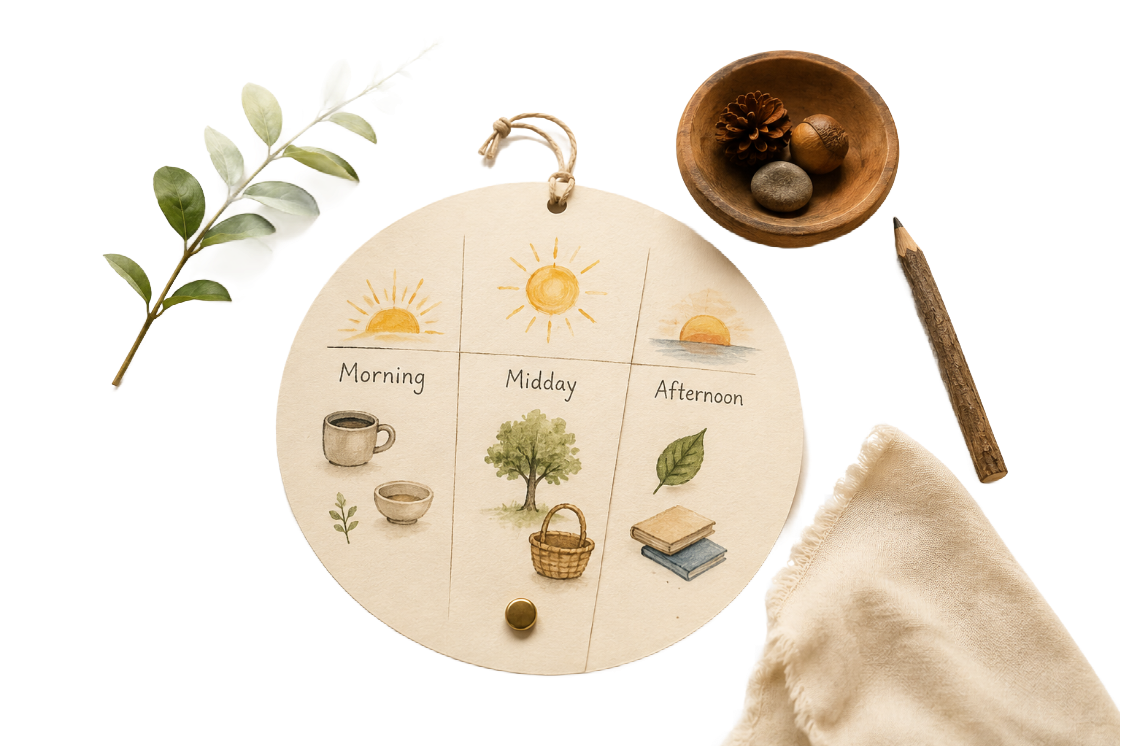
Make a Simple Summer Rhythm Strip
A gentle way to explore sequence and time.
You’ll need:
- Paper
- Crayons or markers
- Scissors, if desired
- Tape, if desired
Fold or draw the paper into three sections:
- Morning
- Afternoon
- Evening
Together, choose one simple thing that often happens in each part of the day.
For example:
- Morning: breakfast
- Midday: outside play
- Evening: rest or story
Invite your child to draw a small picture in each section.
A sun.
You can keep it very simple.
A bowl.
A tree.
A book.
A cup.
Then point to the strip and say:
First, morning. Then, afternoon. Later, evening.
This is not meant to become a strict schedule.
It is simply a way to help your child feel the shape of the day.
Meaningful Work
Caring for the Day
Invite your child into one small act that helps the day move along.
Choose one:
- Set napkins or spoons at the table.
- Wash fruit or snack
- Fill water cups
- Feed a pet
- Water a plant
- Put shoes by the door
- Fold a small towel
- Tidy after an activity
- Choose a book for rest time
Move slowly,
Let your child help fully, even if it takes longer.
These small acts help children feel capable and connected to family life.
Outdoor Invitation
Notice Morning, Afternoon, or Evening
Step outside during one part of the day.
Notice what this time of day feels like.
You might notice:
- The sun's position
- Shadows
- Warmth
- Bird sounds
- Insects
- Flowers opening or closing
- Damp or dry grass
- How your child's body feels
You can ask:
Does this feel like morning, afternoon, or evening?
Or:
What tells us what part of the day it is?
Keep it simple.
One observation is enough.
Quiet Work
Sun Path Drawing
A simple way to notice light, movement, and time.
You’ll need:
- Paper
- Yellow, orange, blue, or soft colors
- Crayons, pencils, or watercolor
Invite your child to make a simple picture of the sun moving across the sky.
It might be one sun.
It might be three suns.
It might be a line, a circle, or a wash of color.
You can say:
Where could the sun be in the morning?
Where could it be later in the day?
Do not worry about accuracy.
Let the work stay gentle.
When the page feels complete, set it aside.
Small Reflection
Simple questions help children revisit and deepen their discoveries.
Later in the day, perhaps at lunch or bedtime, ask:
What part of the day did you like today?
Or:
What helped our day feel calm?
For older children:
What do you like doing in the morning, midday, or afternoon?
No formal answer is needed.
The question is enough.
Weekly Recap
One simple place to remember what mattered most.