
![[background image] image of cozy reading nook (for an author & writer)](https://cdn.prod.website-files.com/69dbe348d0a29252603f7d2c/6a5d184cd17f7237760951fa_july%20r6%20cover%20image%20071926.png)
A Gentle Week, Made Simple
A calm rhythm designed to bring beauty, wonder, and meaningful work into your learning week.
This rhythm is meant to give your family a gentle shape without adding more to your plate. Use the full week, or simply choose the parts that fit your family best.
There is no need to do everything.
Follow the rhythm, not the clock.
This Week's Rhythm
Day One
Today we slow down, gather a few useful or beautiful things, and place them together for tomorrow.
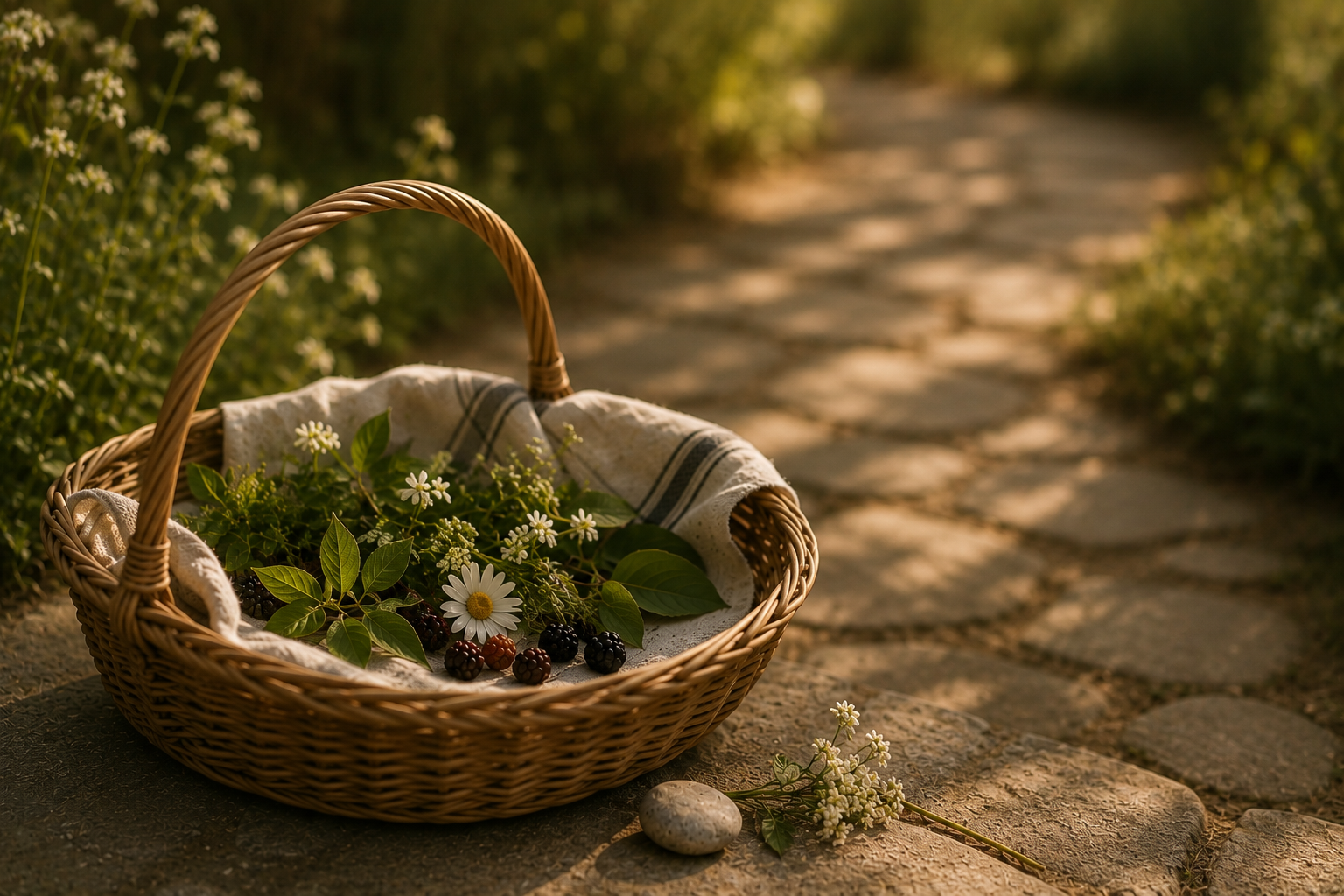
Morning Gathering
Let this gently open the day.
Begin near a window, table, porch, yard, or another quiet place where you can notice a few things around you.
Place a small empty basket, bowl, or tray in the center.
Speak together:
Summer gives us things to see,
Fruit and flowers, leaf and tree.
We will look and choose with care,
Gather gently, then prepare.
Little hands and eyes can find,
Simple gifts of every kind.
Pause for a moment.
Then ask:
What is one useful or beautiful thing we could gather today?
It might be an herb, a piece of fruit, a flower, a leaf, a small branch, or something already waiting in your kitchen.
You do not need a garden.
One carefully chosen thing is enough.
At the end of the gathering, place what you found in the basket, bowl, or tray.
Set it somewhere your child can see it again tomorrow.
This becomes the small ritual that carries the week forward.
Core Experience
Gather with Care
A slow walk to notice, choose, and gather a few small gifts of summer.
Bring a small basket, bowl, tray, or cloth bag.
Then take it somewhere summer is waiting.
Summer might be waiting in your backyard, along a neighborhood walk, at the farmers market, or even in your own kitchen.
Keep the gathering small.
You are not trying to fill the basket.
Instead, invite your child to become a thoughtful collector.
Today, look for just three small gifts of summer:
Something that invites you to stop and smell.
Something that feels interesting in your hands.
Something that makes you think:
I would love to share this with someone.
There are no perfect answers.
One peach.
A sprig of mint.
A flower.
A smooth leaf.
A handful of blueberries.
Something already waiting in your kitchen.
Anything is enough.
As your child chooses each item, pause before placing it in the basket.
Smell it.
Feel it.
Look at it together.
Then ask:
Does this belong in our basket?
If you are gathering outdoors, take only a little.
You might say:
We’ll take just what we need and leave plenty for others to enjoy.
The noticing, choosing, carrying, and gathering are the work.
A Small Ritual
When you return home, place everything together in the basket, bowl, or tray.
Set it somewhere your child will see it tomorrow.
Before you walk away, pause together and say:
These are tomorrow’s treasures.
Then leave them just as they are.
Your child will know they are waiting.
The experience is complete.
Meaningful Work
Prepare the Table
One small act of hospitality begins long before a meal.
Invite your child to help prepare your home for the next time everyone gathers.
Choose one:
- Place napkins on the table.
- Set out cups for your family.
- Fold a kitchen towel.
- Wipe the table with a damp cloth.
- Carry fruit to the table or counter.
- Arrange a small flower in a jar.
Choose just one.
Move slowly.
Real work doesn’t have to be big to matter.
You can say:
We’re getting ready to gather again.
One small act of preparation helps children see that sharing often begins long before anyone sits down together.
Outdoor Invitation
Notice What’s Still Waiting
Not everything beautiful needs to come home with us.
Step outside for just a few quiet minutes.
This time, leave the basket behind.
Look for something you could have gathered today, but choose to leave exactly where it is.
Perhaps it’s:
- A flower that’s still blooming
- Berries not quite ready to pick
- A colorful leaf
- A butterfly visiting a blossom
- A feather resting on the ground
Pause together.
Take one slow breath.
Simply notice.
You might say:
Some treasures are meant to stay where they are.
Then continue on your way.
Quiet Work
Remember What Stayed
A quiet drawing can help us hold onto something without bringing it home.
Offer your child:
- Paper
- Crayons, colored pencils, or watercolor paints
Invite your child to remember one treasure they noticed and left outside.
It might be a flower, leaf, berries on a bush, feather, butterfly—or something entirely different.
Invite them to begin with that one thing.
There is no need to draw it exactly as it looked.
They might remember its color, its shape, the way it moved, or simply how it made them feel.
You can say:
We left it where it belonged, but we can still remember it.
Let the page remain simple.
One shape, one color, or one small mark is enough.
When the drawing is finished, keep it somewhere special as a reminder of what stayed behind.
Small Reflection
Simple questions help children revisit and deepen their discoveries.
As the day comes to a close, pause together for one quiet moment.
Look at tomorrow’s basket, or simply remember something you noticed during the day.
Ask:
What is one treasure you remember from today?
Listen without adding another question.
Then, if you prepared a basket, say:
Our basket will be waiting for us tomorrow.
If not, simply say:
There will be more treasures to notice tomorrow.
Day Two
Today we bring out yesterday’s treasures—or choose a few simple things—and make something to share.

Morning Gathering
Bring out yesterday’s basket, or choose one or two simple things from your kitchen, yard, or market today.
Place them in the center and sit together for a quiet look.
You might begin with this small rhyme:
Yesterday we chose with care,
Little treasures gathered there.
Now we’ll each take one small part,
Working gently, hand and heart.
Side by side, we’ll make today,
Something kind to give away.
Invite your child to choose one thing to hold, smell, or look at closely.
Ask:
What do you notice about it today?
Listen to whatever they share.
Then say:
Today, we will use what we have to make something together.
Core Experience
Prepare a Summer Sharing Tray
A simple snack becomes something special when little hands help prepare and serve it.
Choose one simple snack or drink your family already has.
Fruit, crackers and cheese, toast, berries, or water poured into cups are all enough.
Place it on a tray, plate, bowl, or small cutting board.
Invite your child to help with the real work.
They might wash fruit, arrange the food, set out a napkin, pour with help, or carry one lightweight piece.
An adult should handle any cutting or closely supervise the use of an age-appropriate utensil.
When everything is ready, add one small touch of care.
Place a napkin beside it.
Add a cup.
Or, if you gathered something yesterday, set one flower, leaf, or other small treasure nearby.
Pause together and look at what you made.
You might say:
We used simple things to make this feel special.
Then share it right away.
Carry it to the porch.
Bring it outside for a small picnic.
Offer it to someone at home.
Or sit down and enjoy it together.
Let your child offer the first piece or pour the first cup.
For a moment, an ordinary snack becomes something prepared and shared with care.
Meaningful Work
Everything Back in Its Place
Taking care of our home is one small way we care for the people who share it with us.
After you’ve shared your snack, invite your child to help put a few things back where they belong.
They might:
- Carry a cup to the sink.
- Place a plate on the counter.
- Fold a napkin.
- Wipe the tray with a damp cloth.
- Return the basket to its place.
There is no need to do everything.
One small job is enough.
You might say:
Every home feels a little calmer when we help care for it together.
When you’re finished, take one quiet look around.
Notice how the space is ready for whatever comes next
Outdoor Invitation
Notice Nature Sharing
The world quietly shares with us every day.
Step outside together.
This time, instead of looking for something to gather, look for something that is already giving.
You might notice:
- A tree offering cool shade.
- A flower welcoming bees.
- Birds sharing their songs.
- Clouds bringing rain.
- The breeze cooling your face.
- Sunshine warming the ground.
Pause for a moment.
Ask:
What is nature sharing with us today?
You might say:
Just like we shared something today, nature shares with us every day.
Take one slow breath before heading back inside.
Quiet Work
Remember a Caring Moment
Sometimes the smallest moments stay with us the longest.
Bring out a piece of paper and something to draw with.
Think back through today together.
What is one moment that made someone feel cared for?
Maybe it was:
- Carrying the tray.
- Pouring a drink.
- Offering the first piece.
- Folding a napkin.
- Helping put things away.
- Sitting together to share.
Draw that one moment.
It doesn’t need lots of details.
One person.
One tray.
One cup.
One simple memory is enough.
You might say:
When we care for others, we often remember the feeling long after the moment is over.
Small Reflection
Simple questions help children revisit and deepen their discoveries.
Pause together for a moment.
Remember something you made, shared, or cared for today.
Ask:
What felt special because we did it together?
Listen without searching for a particular answer.
Then say:
Tomorrow, we’ll find another way to share a little care.
Day Three
Today we slow down, remember what mattered, and share a favorite moment together.
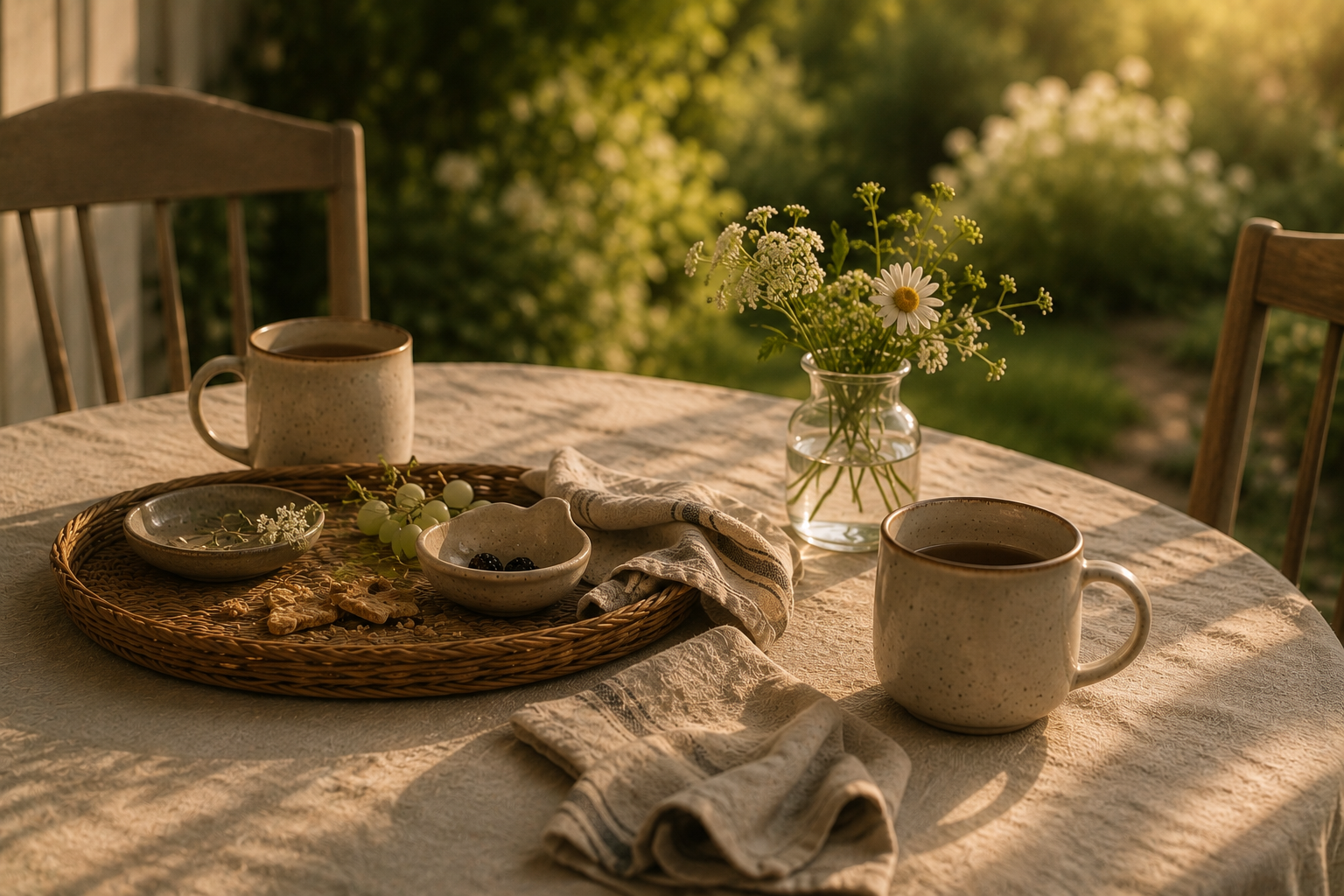
Morning Gathering
Gather together somewhere comfortable.
If you’d like, place yesterday’s basket, a flower, a favorite piece of fruit, or another simple object in the center.
Read together:
Little things prepared with care,
Feel more joyful when we share.
Hands can help and hearts can give,
Kindness grows in how we live.
Now we’ll find one simple way,
To brighten someone else’s day.
Then ask:
What is something you’ve shared that made someone smile?
Listen together for a few moments.
There are no wrong answers.
It might be a toy, a hug, a story, a drawing, or a helping hand.
Close by saying:
Today, we’ll take time to share something we remember.
Core Experience
Share a Favorite Moment
Sometimes the moments we remember most are the ones we take time to share.
Invite your child to choose one favorite part of the week.
It might be:
- something still resting in the gathering basket
- a drawing they made
- a favorite moment from preparing the summer sharing tray
- something they noticed outdoors
- or simply a memory they would like to tell you about
Sit together somewhere comfortable.
If they have something to show, place it on the table between you or hold it together in your hands.
Then gently ask:
Will you tell me about your favorite part?
Follow your child’s lead.
They might tell the whole story, point to one small detail, act it out, or share only a few words.
If the conversation naturally slows, you might ask:
What made that one special?
There is no need to guide the conversation or look for the “right” answer.
Simply enjoy hearing your child’s story.
When they’re finished, you might say:
I loved hearing about your favorite part.
Meaningful Work
Make Our Space Feel Ready
When we care for the places we share, we help them feel welcoming for everyone.
Choose one small place your family enjoys spending time together.
It might be the table where you eat, a reading chair, the nature shelf, the playroom, or another cozy corner of your home.
Invite your child to help make the space feel ready.
They might:
- straighten a small stack of books
- fold a favorite blanket
- wipe the table
- water a nearby plant
- return a few things to their places
Work side by side, choosing only what feels helpful today.
When you are finished, pause together and notice the difference.
You might say:
Thank you for helping make this a welcoming place for our family.
Outdoor Invitation
Care for One Small Place
Sometimes caring for nature is as simple as leaving a place just a little better than you found it.
As you spend time outdoors today, look for one small way to care for the place around you.
It might be:
- moving a fallen stick safely out of the walkway
- picking up a small piece of litter if it’s safe to do so
- setting a tipped flowerpot upright
- moving something out of the walkway
- gently caring for another small corner of the outdoors
Choose just one thing.
Then continue on your way.
Before you head inside, you might ask:
How did we help this place today?
Quiet Work
Make a Quiet Arrangement
A few simple things can become something new when we slow down and place them with care.
Gather three to five small things.
You might use:
- leaves, stones, flowers, or shells
- treasures from an earlier walk
- pieces of fruit or other familiar objects from home
Invite your child to arrange them on a table, tray, cloth, or patch of ground.
They might place them in a line, a circle, a small group, or another way that feels right to them.
Let them move the pieces, begin again, or simply sit and look for a while.
There is nothing they need to make and no correct way for the arrangement to look.
When they seem finished, you might say:
Let’s take a quiet moment to look at what you made.
Then pause together before putting the objects away or leaving them in place for a little while.
Small Reflection
Simple questions help children revisit and deepen their discoveries.
Find a comfortable place to sit together.
Take one slow breath and think back on the week.
You might ask:
What is one thing you’d like to do again someday?
Listen without trying to guide the answer.
It might be something simple:
- gathering treasures
- preparing a special snack
- caring for a favorite outdoor place
- sharing a story together
- or something completely unexpected
When they’re finished, simply smile and say:
I would like to do that again, too.